

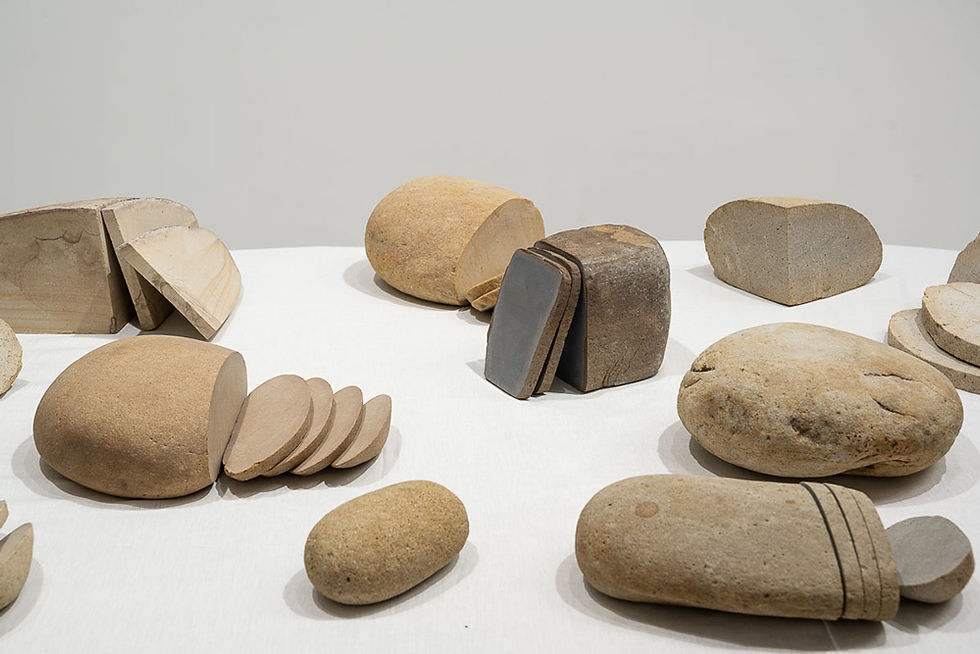
Palianytsia
Zhanna Kadyrova
Palianytsia means bread. The classical meaning of the word is a large-sized round wheat bread, baked in the oven.
At the start of the war that Russia unleashed against Ukraine, the word Palianytsia became a symbol, since Russian occupiers are unable to pronounce it correctly. It became a shibboleth, distinguishing unequivocally friends from enemies.
In addition to conventional troops, Russia sent groups of saboteurs to Ukrainian cities in advance of the invasion. The saboteurs' task was to spy and inform Russians where our armed forces were stationed, where checkpoints and infrastructure facilities are located. They also left identifying marks to help aviation and landing forces navigate and so on. These people moved around the cities in civilian clothes but were armed.
The project was inspired by the Transcartathian region where we now live with my co-author Denis Ruban. When the second week of the war started, our whole family was forced to leave our hometown, Kyiv. My mother, sister and aunt are now in Germany, yet we continue to live here and hope to return to Kyiv. The villages here are protected by the Carpathian Mountains and there are many mountain rivers; their waters run fast and polish the stones. There are no strategic sites such as airfields, military bases and weapons depots here, so we think we are safe. Even though sometimes there are air raid sirens.
Upon arrival, we stopped at an overcrowded expensive hotel in the district centre. Trying to find our own place, we walked and travelled a lot around the area, and that was when we noticed the river stones. We started looking at them more closely and the idea just came to us. There was no time for distancing and analysis, there was a growing need to do something and be useful!
A the moment, there are about 6.5 million internally displaced persons in western Ukraine, so finding a place, especially one with a workshop, was incredibly difficult.
On the fifth day of search, we succeeded! We found a detached house with no utilities, not even electricity, because a tree fell 7 years ago and broke the wires. Together with the owners, we started organizing everything from scratch.
Now we have electricity, Internet, a refrigerator and a microwave oven, firewood for cooking and heating the house and water from a well. Most importantly, we can work. Being able to work on a project really helps us to stay sane, because we feel that we are doing everything we can. We donate 100% of the money we receive for these artworks to volunteer organizations and friends who stayed in Kyiv and joined Territorial Defense forces there.
For the first two weeks of the war, it seemed to me that art was a dream, that all twenty years of my professional life were just something I had seen while asleep, that art was absolutely powerless and ephemeral in comparison to the merciless military machine destroying peaceful cities and human lives. Now I no longer think so: I see that every artistic gesture makes us visible and makes our voices heard
Who Killed The Painting
Driton Hajredini

Driton Hajredini's installation "Who Killed the Painting?" (2003) is a thought-provoking work that delves into the evolving nature of art and its reception in contemporary society. This piece was part of the Sammlung Block collection, highlighting its significance within the art community.
Hajredini, born in 1970 in Pristina, Kosovo, has developed a diverse artistic practice encompassing painting, video art, installation, photography, and film. His works frequently explore themes such as borders, refugees, exile, war, and isolation. Notably, his style often includes a satirical take on established international artworks, reflecting a critical perspective on the art world's conventions.
In "Who Killed the Painting?", Hajredini examines the shifting paradigms of artistic expression, questioning the relevance and position of traditional painting in an era dominated by new media and conceptual art forms. The installation prompts viewers to reflect on the potential 'death' of painting as a medium and to consider the factors contributing to its perceived decline or transformation.
While specific details about the installation's components are limited, the title and context suggest a critical inquiry into the art world's dynamics, possibly addressing issues such as commercialization, technological advancements, and changing audience perceptions. Hajredini's work encourages a dialogue about the value and evolution of artistic mediums in contemporary culture.
Through "Who Killed the Painting?", Hajredini invites audiences to engage in a deeper contemplation of art's trajectory, challenging them to reconsider preconceived notions about the hierarchy and vitality of various art forms in the modern age.
Fragments of Survival
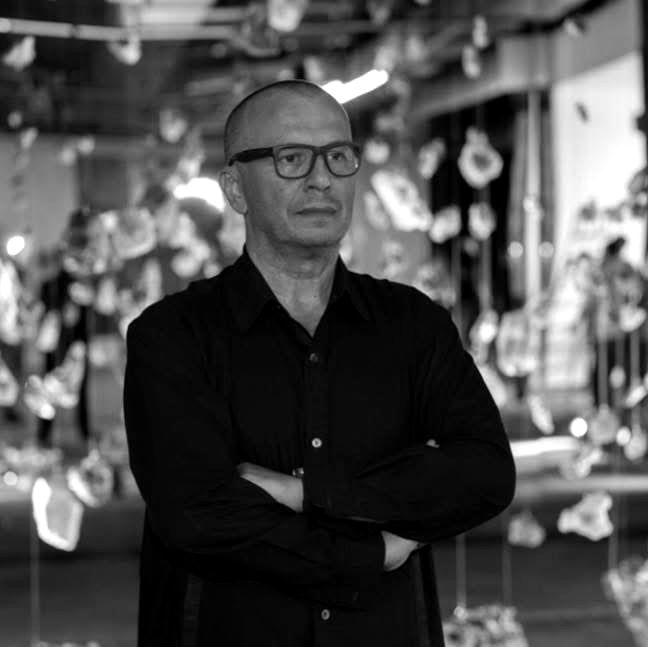
Hussein Al-Jerjawi
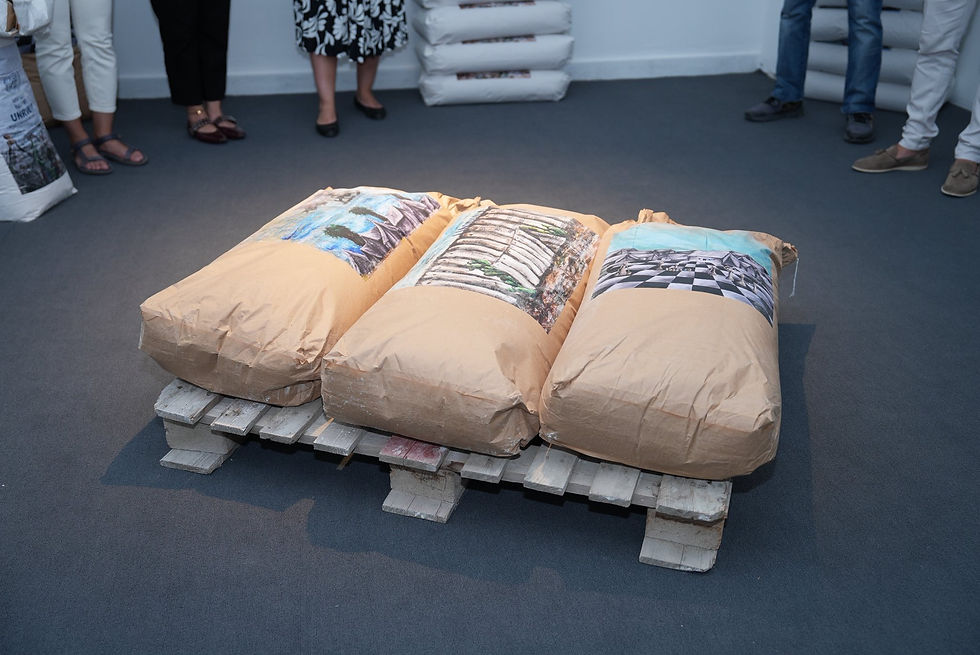
Hussein al-Jerjawi, 18, has endured displacement five times because of the war provoked by Hamas’s 7 October 2023 attacks. The conflict has also cost him his education. The war profoundly influenced his artistic journey, and he turned to an unconventional medium: humanitarian flour bags as canvases. His paintings on the symbols of survival in a besieged land show cracks, fissures and other symbols that reflect the fractured existence of those in Gaza.
“When I paint on a flour bag, it feels as if I’m writing our history with a brush dipped in suffering and resilience. The choice of aid bags is a natural response to the scarcity of traditional art supplies in Gaza”, al-Jerjawi said. “In a refugee tent, surrounded by empty UNRWA flour bags, I decided to paint on them to capture the pain of war and my story of displacement,” he said, referring to the United Nations Relief and Works Agency for Palestine Refugees, the main UN aid agency for Palestinians.
Developments of recent weeks have only added poignancy to al-Jerjawi’s medium of expression. UNRWA is now shut out by Israel and the USA, who have established as its replacement the controversial Gaza Humanitarian Foundation, whose patchy food distributions have so far been accompanied by Israeli army mass shootings of prospective Palestinian aid beneficiaries on an almost daily basis.
Created under the extreme conditions of siege and war, al-Jerjawi’s work stands as a visceral testament to the enduring power of creativity in the face of hardship and destruction.
“Even after losing so much, my art remains my defiance,” he said. Describing one of his paintings, al-Jerjawi said “bags of flour silently witness the stories of the displaced, waiting for survival. With printed words emphasizing a frozen human condition, the raised, clenched hands – some gripping flour, others empty – speak to the desperate search for hope.”
He added that “the faces are stories of fatigue and hunger. The eyes ask not just for bread but for dignity. The faded crowd in the background, like shadows, waits in an endless line.” Al-Jerjawi views his art as a defense of Palestinian identity.
This work presents the political narrative and collective trauma of Gaza and offers a more
intimate reflection on identity, the body, and personal spaces of survival.
At Reporting House, we reflect on the impact of war and conflict, and on societies shaped by
resistance and the fight for freedom. We believe that by sharing diverse perspectives we take a
small step forward to foster solidarity, deeper understanding, and remind our visitors that the
struggle for justice and peace is a shared human experience.